

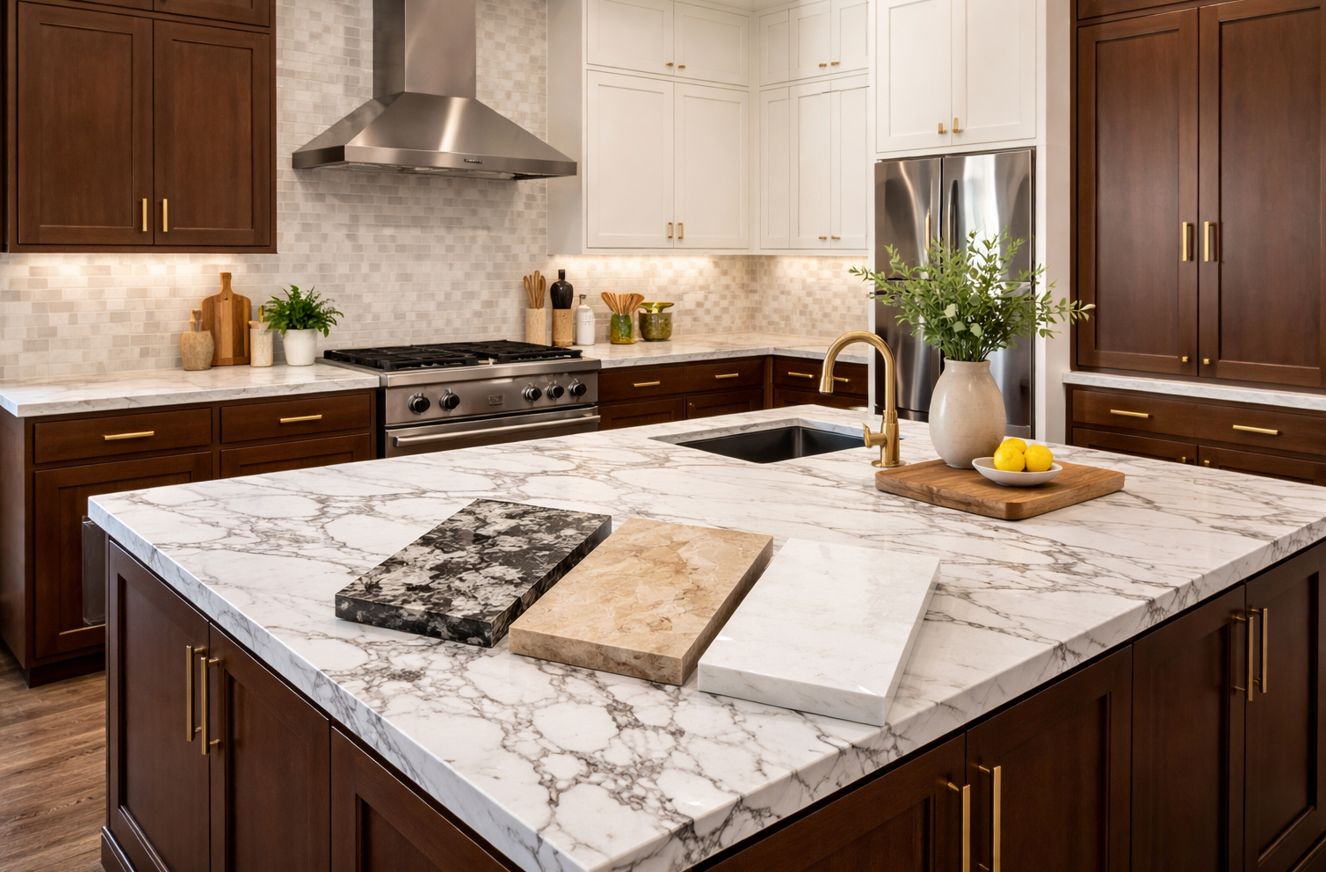
Kitchens are the heart of the home. They’re where families gather for meals, conversations, and everyday moments that make a house feel welcoming. When homeowners plan a kitchen update, two design elements immediately shape the room’s entire appearance—cabinets and countertops.
These two surfaces dominate the kitchen visually. If they work well together, the entire room feels balanced and polished. When they clash, even a well-equipped kitchen can feel disjointed.
Homeowners across Brownstown are increasingly focusing on kitchen designs that combine beauty with everyday practicality. A thoughtful pairing of cabinetry and countertop materials helps create a kitchen that feels bright, functional, and inviting.
Local homeowners often turn to Ace Kitchen, Bath & Flooring when planning kitchen upgrades because choosing the right materials and color combinations can make a dramatic difference in how the space looks and functions.
This guide walks through practical design ideas that help cabinets and countertops complement each other naturally. From understanding kitchen styles to balancing colors and materials, you’ll discover how thoughtful pairings can transform your kitchen into a space that feels cohesive, stylish, and comfortable for daily living.
Why Countertops and Cabinets Must Work Together
Cabinets form the foundation of kitchen design. They occupy a large portion of the visual space and set the overall tone for the room. Countertops, meanwhile, sit directly above them and act as the design bridge that connects cabinetry, backsplash, and appliances.
Because these two elements sit side by side throughout the entire kitchen, they need to work together harmoniously.
When the pairing is right, the kitchen feels cohesive. Colors complement each other, materials blend naturally, and the entire space looks thoughtfully designed.
However, when cabinets and countertops clash, the eye immediately notices the disconnect. A dark countertop that overwhelms light cabinetry—or overly busy stone paired with detailed cabinets—can make the room feel visually crowded.
A balanced design helps avoid these issues by focusing on three key principles:
Color balance between cabinetry and countertop surfaces
Material harmony that blends textures naturally
Visual contrast that adds depth without overwhelming the space
In Brownstown homes, kitchens often serve as both cooking areas and social spaces. Families gather around islands while preparing meals, and guests naturally gravitate toward the kitchen during gatherings.
When cabinets and countertops complement each other, the kitchen feels welcoming and organized. Surfaces look intentional rather than accidental, and the room becomes a comfortable place where people enjoy spending time.
Designing with this balance in mind helps homeowners create kitchens that feel timeless rather than trendy.
Start with Your Kitchen Style
The easiest way to pair cabinets and countertops is to begin with the overall style of the kitchen. When you understand the design direction first, selecting complementary materials becomes much simpler.
Different kitchen styles naturally lend themselves to certain countertop materials and finishes.
Modern Kitchens
Modern kitchens emphasize clean lines and minimal decoration. Cabinetry often features smooth surfaces, simple hardware, and neutral colors such as white, gray, or matte black.
In these kitchens, countertops typically follow the same streamlined aesthetic.
Common choices include:
Quartz with subtle veining
Polished stone with uniform patterns
Light neutral surfaces that reflect light
These materials reinforce the modern kitchen’s crisp, sophisticated appearance.
Traditional Kitchens
Traditional kitchens offer warmth and character through classic details. Raised panel cabinets, decorative hardware, and rich wood finishes are common elements.
Countertops that pair well with traditional cabinets often include:
Granite with natural movement
Soft cream or beige stone surfaces
Warm-toned quartz designs
These materials add visual texture while maintaining the timeless charm associated with traditional kitchens.
Transitional Kitchens
Transitional kitchens combine modern simplicity with classic warmth. Many homeowners in Brownstown prefer this style because it blends elegance with practicality.
Shaker cabinets are a popular choice for transitional kitchens, often paired with quartz countertops in soft neutral tones.
The result is a kitchen that feels both current and timeless.
Matching Cabinet Colors with Countertop Materials
Color pairing plays a major role in creating a balanced kitchen design. The relationship between cabinet color and countertop tone influences how large, bright, or cozy the kitchen feels.
Thoughtful combinations help the room feel harmonious.
White Cabinets
White cabinets remain one of the most popular choices because they brighten the room and create a clean foundation for the rest of the design.
They pair beautifully with a wide range of countertop materials, including:
Marble-inspired quartz
Soft gray granite
Light natural stone
Subtle veining within the countertop adds visual interest without overwhelming the bright cabinetry.
Dark Cabinets
Dark cabinetry adds depth and sophistication to kitchen spaces. Deep navy, charcoal, and espresso finishes create strong visual anchors within the room.
To balance darker cabinets, homeowners often choose lighter countertop surfaces such as:
Bright quartz designs
Soft cream granite
Marble-inspired stone
This contrast keeps the kitchen feeling open rather than heavy.
Natural Wood Cabinets
Natural wood cabinets bring warmth and texture to the kitchen. Wood grain patterns create visual richness that many homeowners appreciate.
Countertops that complement wood cabinetry typically include:
Creamy quartz surfaces
Light granite with subtle patterning
Stone with warm undertones
Together, these elements create a welcoming environment that feels comfortable and grounded.
Balancing cabinet and countertop tones helps ensure the kitchen feels cohesive rather than overwhelming.
Popular Countertop Materials for Brownstown Kitchens
Choosing the right countertop material affects both appearance and daily usability. Homeowners want surfaces that look beautiful while standing up to everyday kitchen activities.
Several materials consistently stand out for their durability and design versatility.
Quartz Countertops
Quartz has become one of the most widely chosen countertop materials in modern kitchens.
Its advantages include:
Durable engineered surface resistant to everyday wear
Wide range of colors and veining patterns
Low maintenance compared with natural stone
Quartz works particularly well with sleek cabinetry and contemporary kitchen layouts.
Many homeowners pairing quartz with custom cabinets appreciate how the clean lines of cabinetry complement quartz’s smooth surface.
Granite Countertops
Granite remains a classic choice thanks to its natural beauty. Each slab features unique patterns formed over millions of years.
Granite offers:
Heat resistance ideal for cooking spaces
Distinctive natural movement in the stone
Long-lasting durability
Granite works especially well in kitchens where homeowners want the countertop to serve as a visual centerpiece.
Marble-Look Surfaces
Marble-inspired surfaces have grown increasingly popular in recent years. These designs capture the elegant veining of marble while offering modern durability.
They pair beautifully with both white and wood cabinetry, creating kitchens that feel bright and sophisticated.
Selecting the right countertop material ensures the kitchen remains both stylish and functional for daily use.
Creating Contrast for a More Dynamic Kitchen
Contrast is one of the most effective design techniques for making a kitchen visually interesting. When cabinets and countertops differ slightly in color or texture, each element becomes more noticeable.
The key is achieving balance rather than extreme contrast.
Light Cabinets with Dark Countertops
This combination creates strong visual structure within the kitchen.
Benefits include:
Clear definition between surfaces
A bold focal point around the work area
A modern, dramatic appearance
Dark countertops also tend to highlight lighter cabinetry details.
Dark Cabinets with Light Countertops
This pairing is especially popular because it brightens the kitchen while maintaining depth.
Advantages include:
A balanced and inviting atmosphere
Improved reflection of natural light
A sense of openness within the room
The contrast draws attention to both materials without overpowering the space.
Mixing Textures
Texture contrast can be just as effective as color contrast.
Examples include:
Matte cabinetry paired with polished stone countertops
Natural wood cabinets paired with smooth quartz surfaces
These combinations create visual interest while keeping the overall design cohesive.
Small Kitchen Design Tips for Brownstown Homes
Many homes in Brownstown feature compact kitchens that require thoughtful design choices. Pairing cabinets and countertops carefully helps smaller spaces feel open and functional.
Choose Light Countertops
Light surfaces reflect natural and artificial light more effectively. This reflection helps the room appear brighter and more spacious.
Use Simple Cabinet Designs
Clean cabinet lines help prevent visual clutter in small kitchens. Flat or shaker-style cabinets often work well because they create a streamlined appearance.
Extend Countertops to the Backsplash
Continuing countertop material up the wall creates a seamless look that visually expands the room.
This technique also simplifies cleaning and maintenance.
Keep the Color Palette Consistent
Limiting the number of colors used throughout the kitchen helps maintain a cohesive appearance.
Neutral color palettes allow cabinetry and countertops to complement each other naturally without overwhelming the space.
These strategies help homeowners maximize both functionality and visual comfort in smaller kitchens.
How Lighting Influences Cabinet and Countertop Pairings
Lighting plays a powerful role in how materials appear inside the kitchen. A countertop that looks warm in the showroom may appear cooler in a kitchen with different lighting conditions.
Understanding this relationship helps homeowners make confident design choices.
Natural Light
Sunlight enhances natural stone patterns and brightens lighter countertops. Kitchens with large windows often benefit from surfaces that reflect light gently rather than absorbing it.
Under-Cabinet Lighting
Under-cabinet lighting highlights the beauty of countertop surfaces while improving visibility during food preparation.
This lighting also creates a welcoming glow throughout the kitchen.
Warm vs Cool Lighting
Warm lighting tends to enhance wood cabinetry and creamy countertop tones.
Cooler lighting, on the other hand, complements modern surfaces such as quartz and polished stone.
Testing materials under the lighting conditions present in the kitchen helps ensure the final design feels cohesive and comfortable.
Designing a Kitchen That Feels Beautiful and Functional
Pairing cabinets and countertops thoughtfully can transform a kitchen from ordinary to extraordinary.
When homeowners begin with a clear design style, balance colors carefully, and select durable materials, the kitchen naturally becomes a more enjoyable space to cook, gather, and relax.
Key ideas to remember include:
Start with the overall kitchen style
Balance cabinet color with countertop tone
Use contrast strategically for visual interest
Choose materials designed for everyday use
Consider lighting when selecting finishes
These elements work together to create kitchens that feel both elegant and practical.
For homeowners in Brownstown who want professional design guidance for their renovation, get in touch to start planning a kitchen that perfectly reflects your style and everyday needs.


