

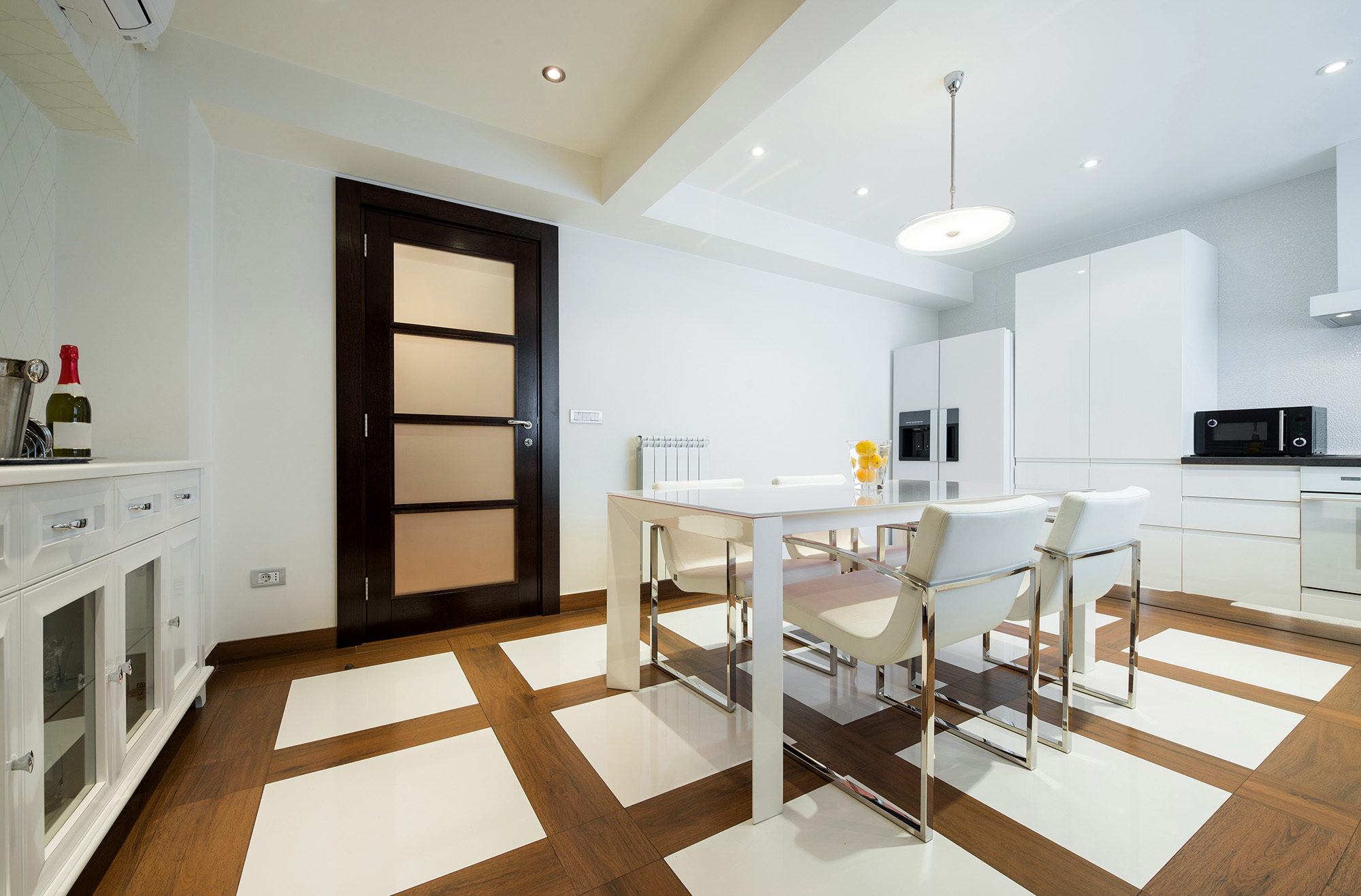
Open-concept home layouts have completely transformed how we live, creating bright, breezy sightlines across our main living spaces. However, this architectural trend presents a unique practical design challenge: how do you transition between different functional zones without creating awkward visual breaks or tripping hazards?
The most common intersection happens between high-traffic culinary spaces and cozy family rooms—specifically, transitioning from a durable porcelain tile kitchen floor to a warm Luxury Vinyl Plank (LVP) living area. To make these spaces flow naturally, you must understand both the aesthetic and mechanical rules of mixed flooring transitions.
Mastering the Mechanical Connection
The first hurdle when joining tile and luxury vinyl plank is managing the physical height difference. Porcelain tiles are thick and sit on top of a layer of thin-set mortar, whereas luxury vinyl planks are significantly thinner and sit closer to the subfloor.
If you simply butt these two materials together, you will create a jagged, uneven lip that catches socks and stubs toes.
Using T-Moldings: If both floors are floating at nearly the identical height, a color-matched T-molding can bridge the gap beautifully, hiding expansion spaces while providing a low-profile cap.
Deploying Reducer Profiles: When transitioning down from a thick tile floor to a lower LVP profile, a reducer profile provides a smooth, gently sloped ramp that eliminates the tripping hazard completely.
Utilizing Metal Transition Strips: For a sleek, contemporary look, slim architectural metal profiles (like those from Schluter) offer an incredibly narrow, minimal metal divider line that sits completely flush with both surfaces.
Designing a Visually Flawless Floor Intersection
Once you have solved the physical height difference, you need to ensure the two materials complement each other visually.
Balance Your Tones and Patterns
If your luxury vinyl plank features a highly rustic wood pattern with heavy grain variations and knots, your tile should remain relatively calm and quiet. Combining a busy, highly variegated wood plank directly next to a heavily veined marble-look tile creates immediate visual chaos. Let one floor be the textured focal point while the other acts as a clean neutral anchor.
Consider the Direction of the Planks
When running wood-look LVP up to a tile boundary, think about the angle of intersection. Running your vinyl planks perpendicular (at a 90-degree angle) to the tile line creates a very clean, intentional boundary. Running them parallel can sometimes look like an accidental misalignment if the transition wall isn't perfectly square.
Create a Unified Flow in Your Home
A beautiful home is all about cohesive detail. By planning your floor heights, material choices, and transition profiles during the design stage rather than figure it out on the fly during installation, you can create a beautifully integrated open layout.
Want to test how different flooring textures look side-by-side? Our Trenton showroom features expansive displays where you can lay tile and LVP samples next to each other under realistic light. Plus, take advantage of our free sample delivery program!
Connect with an Ace flooring specialist today to map out your open-concept transformation!


